
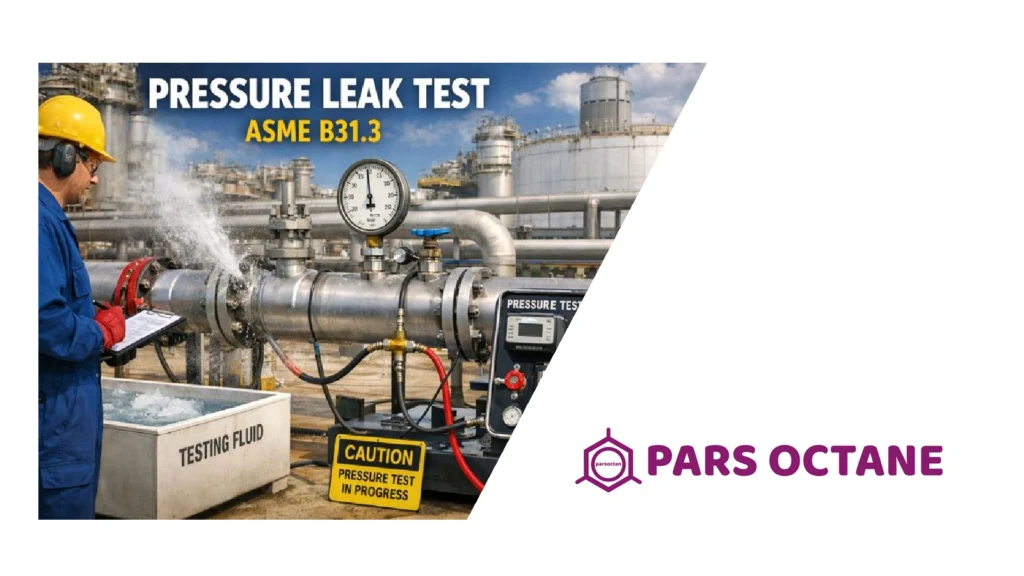
What Is ASME B31.3 Rules for Pressure Leak Test?
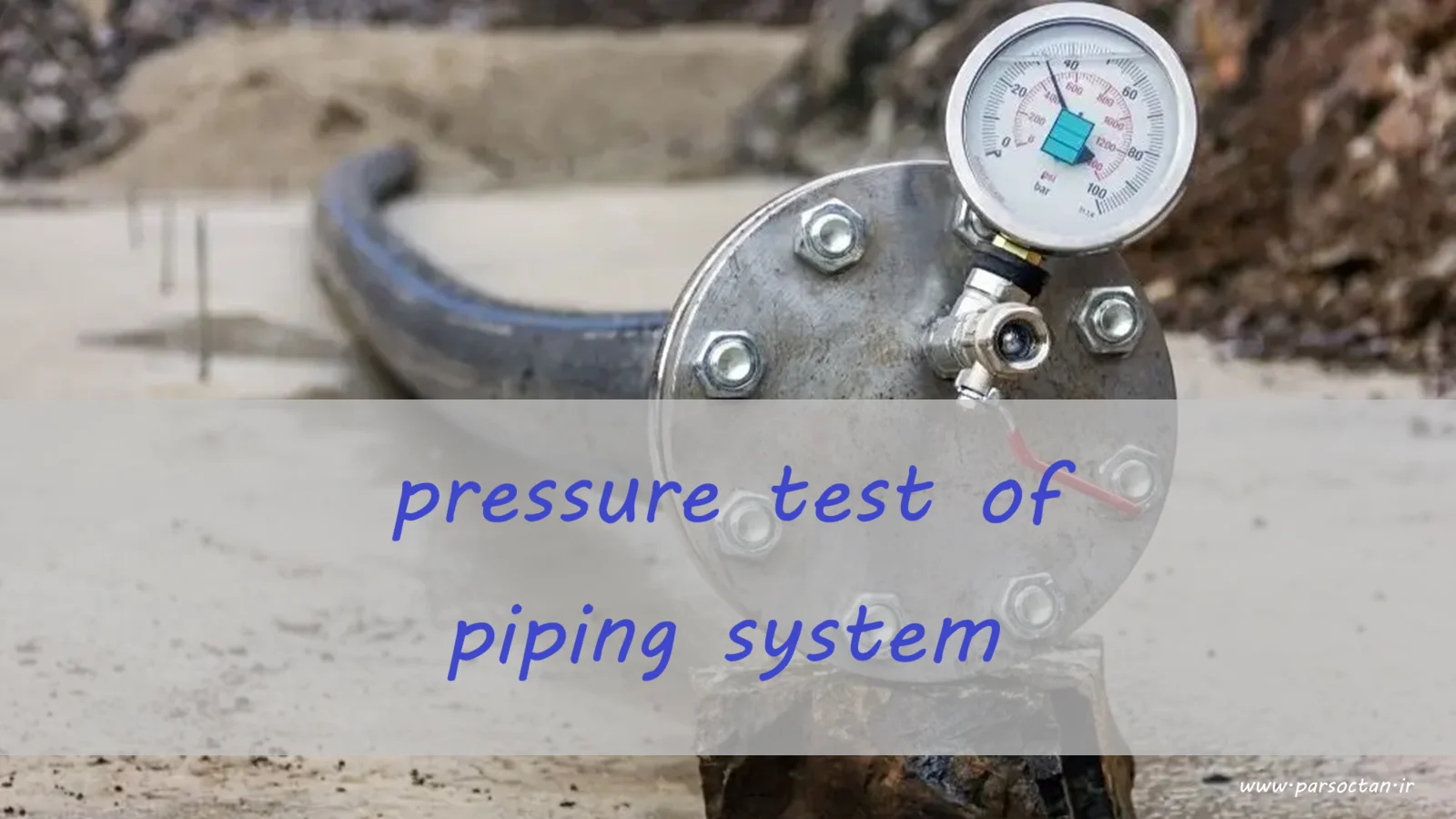
piping pressure test is a straightforward test in which a pressurized fluid is introduced into the system to check for leaks, welding defects, and leakage from pipe joints and flanges.
In a piping pressure test—also known as a pressure leak test—the objective is simply to verify whether the piping that has been designed and fabricated will leak during operation or not.
Essentially, a pressure test has two main purposes:
- To determine the leakage level of welded and flanged joints in the piping system
- To determine leakage at joints that are not covered by UT inspection or radiographic testing
ASME B31.3, the Process Piping Code, provides guidelines for pressure testing of piping systems.
The primary purpose of these tests is to ensure the integrity and safety of the piping system before it is put into service.
Pressure Leak Test Methods

“Pressure testing” is a general term. The specific name depends on how the test is performed. The code identifies six test methods, as follows:
- Hydrostatic test
- Pneumatic test
- Hydrostatic–pneumatic leak test
- Initial service leak test
- Sensitive leak test
- Alternative leak test
Hydrostatic Leak Test
The hydrostatic leak test, commonly referred to simply as a hydrotest, is the most common type of test and uses water as the test fluid.The hydrotest pressure shall be 1.5 times the design pressure × the stress ratio, unless the system operates at very high temperatures. Only when a hydrostatic test could damage the piping or is impractical is a pneumatic leak test recommended as an alternative pressure leak test.
Pneumatic Leak Test
A pneumatic test uses air or an inert gas as the test medium at 1.1 times the design pressure. This test must be carefully evaluated because of the hazards associated with the stored energy of compressed fluids, which may cause an explosive failure if a rupture occurs.
Hydrostatic–Pneumatic Leak Test
Similar to Method 2, when a hydrostatic test is not suitable, a combination of hydrostatic and pneumatic testing may be proposed.
Initial Service Leak Test
With the owner’s approval, this test is applicable only to Category D fluid services. The system is tested during initial operation using the actual service fluid. The test pressure is the same as the operating pressure.
Sensitive Leak Test
Sometimes referred to as a bubble test. The test pressure is only 105 kPa or 25% of the design pressure. This test is required for Category M fluid services as an additional pressure leak test prior to hydrostatic or pneumatic testing.
Alternative Leak Test
In cases where neither hydrostatic nor pneumatic testing is feasible, an alternative leak test may be proposed, which generally involves a comprehensive visual inspection of all weld joints.
Hydrotest and Types of Pressure Leak Tests in Piping
Pressure Test Requirements in Piping
- Piping that is only exposed to atmospheric pressure does not require a leak test unless specified by the owner or the design. This is because such piping is not pressurized and the system does not retain pressure.
- Category D piping systems may be tested solely using an initial service leak test.
- Pressure during a leak test shall be maintained for at least 10 minutes. Filling, venting, and pressurization usually take the most time.
- Pressure testing shall be performed after completion of all required heat treatment operations.
- After completion of a pressure leak test, if any repairs or modifications are made, the piping system must be retested. Minor changes may be exempt from retesting, depending on the project specification.
- All joints must be fully visible during the pressure test; therefore, painting should preferably not be applied beforehand, as paint may prevent detection of small leaks.
- For pneumatic pressure tests, the hazard of stored energy must be evaluated. One method is to use the standard calculations in ASME PCC-2, which provides guidance on safe distances from piping under pneumatic testing.
Conclusion
Pressure leak testing is one of the most important acceptance tests for process piping systems. By following the requirements of ASME B31.3, engineers can verify that piping systems are leak-tight, structurally sound, and safe for operation. Selecting the appropriate testing method—whether hydrostatic, pneumatic, combined, or an alternative approach—depends on the service conditions, system design, and project requirements while maintaining compliance with the Code and ensuring personnel safety.

Leave a Reply